What SSL is, and what "expires in 40 days" means
01The short answer#
SSL (technically TLS today) is what puts the padlock in the address bar. Your server shows the browser a certificate proving it really is your domain, and the two agree on encryption before a single byte of the page loads.
"Expires in 40 days" is that certificate's end date. Free certificates last 90 days and paid ones up to a year. Renewal is supposed to be automatic, and when it quietly isn't, every visitor gets a full-page browser warning instead of your site.
02How it breaks#
- Auto-renewal fails silently after a DNS change, a server move or an expired API token.
- A new subdomain goes live with no certificate, or one issued for the wrong name.
- A CDN or load balancer keeps serving the old certificate after the origin renewed.
All three look fine from inside your server. The only way to catch them is to look at your site the way a visitor does, from the outside, on every check.
03How UpControl watches it#
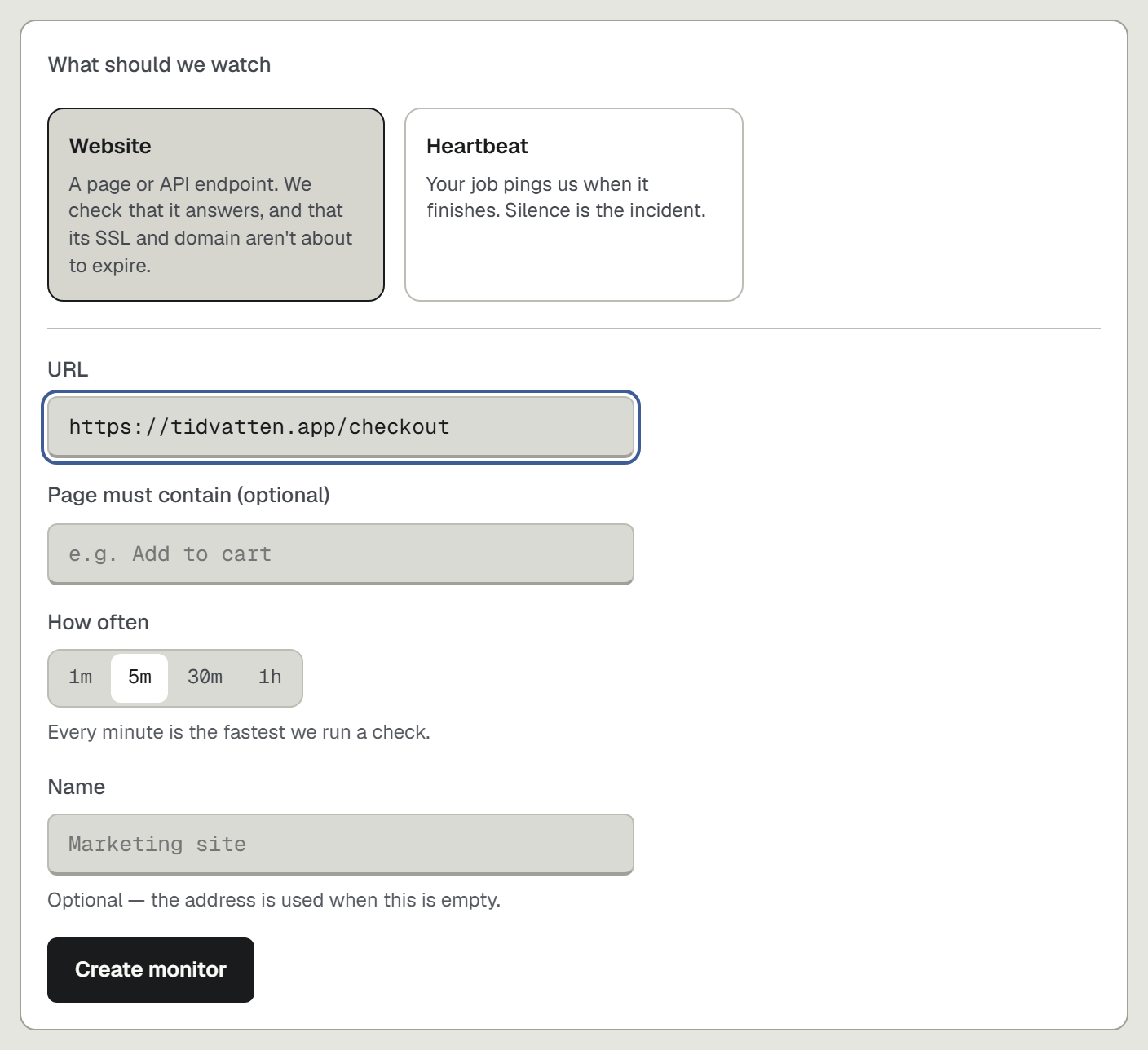
Every UpControl website check reads your certificate on every run and shows when it expires, right next to your domain's own expiry date. It's on every plan, Free included, with nothing to configure: paste your URL on upcontrol.io and it's watched from that moment.
If the certificate breaks, the check fails like any outage. Three failures in a row open an incident and alert you in Telegram, Slack, Discord or email, well before a customer sends you a screenshot of the warning page.