What observability means, and what a small team actually needs
01The short answer#
Observability means you can answer "why is this broken?" from the data your system already produces, without shipping new code to find out. The usual sources are logs, metrics and traces.
The big platforms sell all three with a steep bill and a week of setup. Most small teams need far less: to know when something broke, what it said, and what changed right before.
02What a small team actually needs#
- Checks from outside, so you hear about an outage first.
- Error logs from your app, so the alert says what failed.
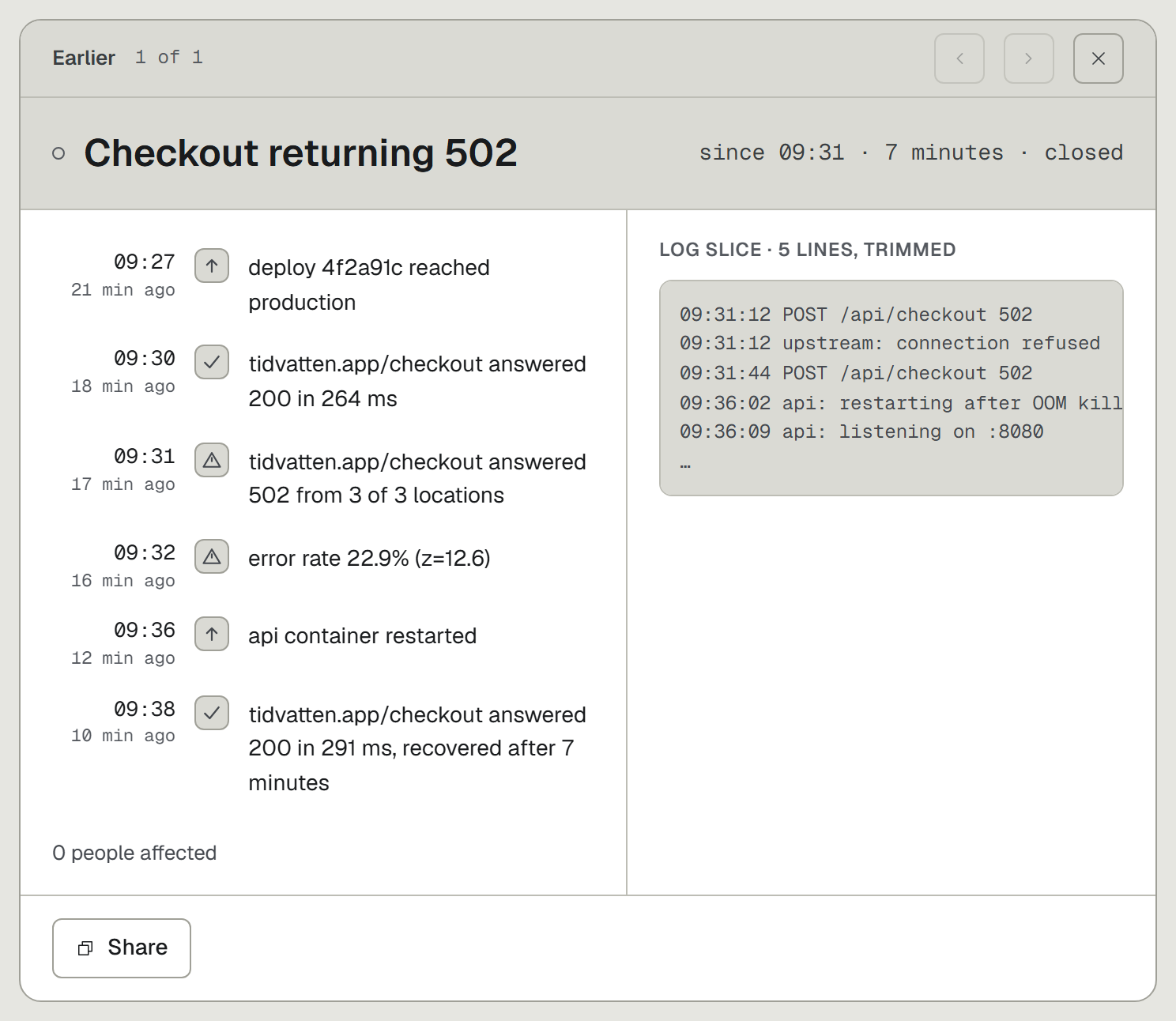
- Deploys and key events, so you can see what changed.
- All of it on one timeline, not in three tools.
03How UpControl gets you there#
UpControl puts checks, logs, events and deploys in one place and lines them up on every incident. You don't write the instrumentation yourself: run npx upcontrol, tell your coding agent what to track, and it adds the log points in a diff you review.
It works with Claude Code, Cursor, Codex, Gemini CLI and six more agents, and the free plan includes logs and events, not just checks. You get the "why" without the platform bill.