What uptime monitoring actually checks
01The short answer#
An uptime monitor visits your site on a schedule and records what comes back. If the answer is an error, a timeout or a missing page, it tries again, and when the failures keep coming, it tells you.
It has to run from outside. A check on your own server can only report that the server thinks it's fine. It can't see an expired certificate, a DNS mistake, a firewall rule or the machine being off, and every one of those is an outage to a visitor.
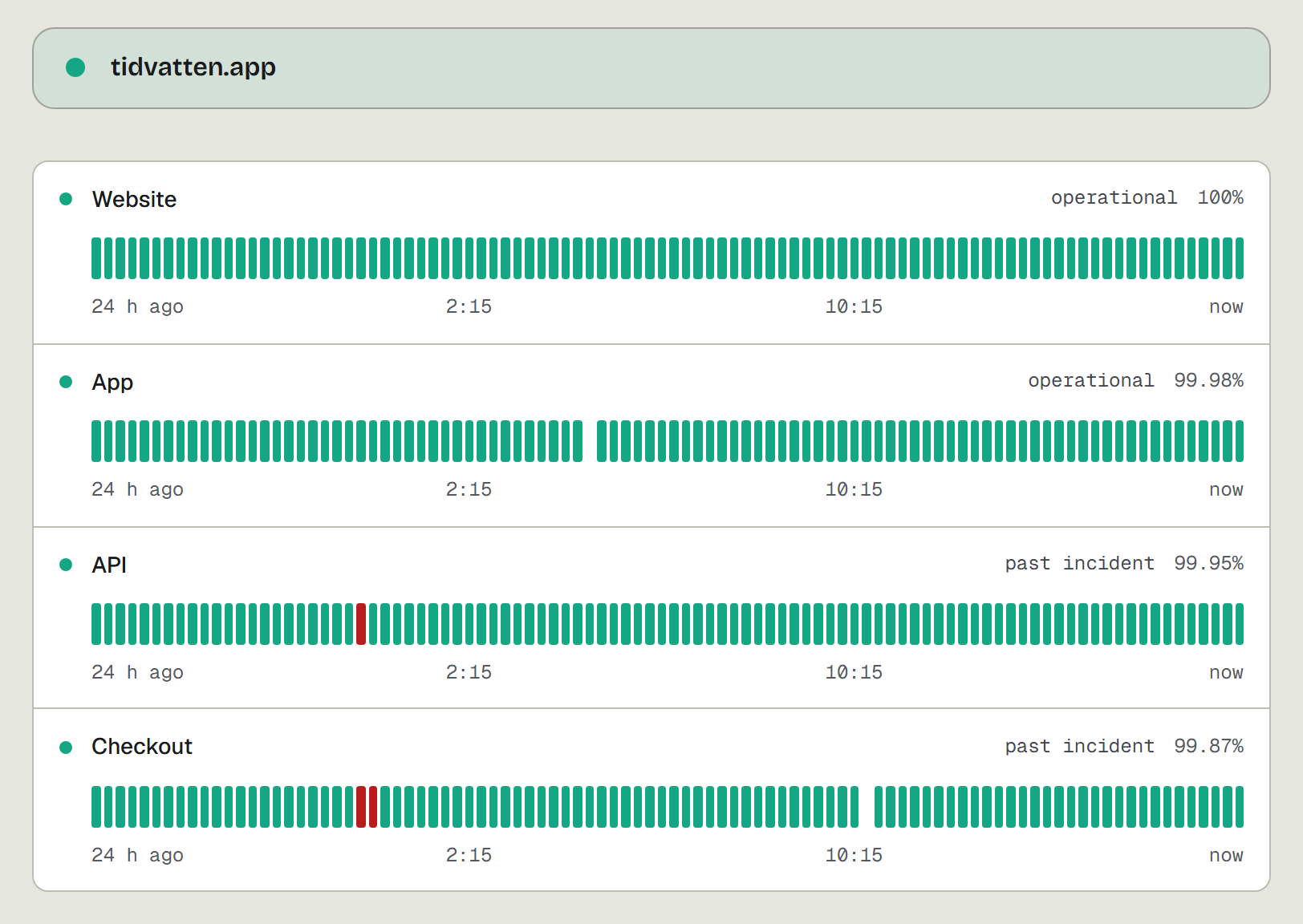
02What separates a good monitor from a noisy one#
- Confirmation. Alerting on the first failure pages you for every network hiccup. Waiting for a few in a row doesn't.
- Honest numbers. A check that never ran is not 100% uptime, and a probe blocked by a firewall is not an outage.
- Context. "Down" is where the work starts. A good alert already says why.
03How UpControl does it#
Paste your URL on upcontrol.io and you have checks and a public status page in about a minute, no account needed. Free checks run every 5 minutes and paid plans every minute, and every check also tracks your SSL certificate and domain expiry.
An incident opens after 3 failures in a row, with the error in its title. Connect your app's logs and deploys and it also carries the log lines around the failure and what you shipped right before it. That's the difference between "your site is down" and "your site is down, and here's what changed at 2:14".