What HTTP status codes mean when a monitor reports one
01The short answer#
Every web response starts with a three-digit status code, and the first digit is the one that matters: 2xx worked, 3xx means go somewhere else, 4xx means the request was wrong, and 5xx means the server failed.
So when an alert arrives with a code, you already know where to look. A 5xx is yours to fix. A 4xx is usually a broken link, a deleted page or a login wall.
02The ones you will actually see#
| Code | Means | Usually |
|---|---|---|
| 200 | OK | All good |
| 301, 302 | Moved | A redirect, fine unless it loops |
| 401, 403 | Not allowed | A login wall or a firewall |
| 404 | Not found | A deleted page or a bad link |
| 429 | Too many requests | Rate limiting |
| 500 | Server error | A crash in your code |
| 502, 504 | Bad gateway, gateway timeout | The app behind your proxy is down or slow |
| 503 | Unavailable | Overloaded, or in maintenance |
03How UpControl reads them#
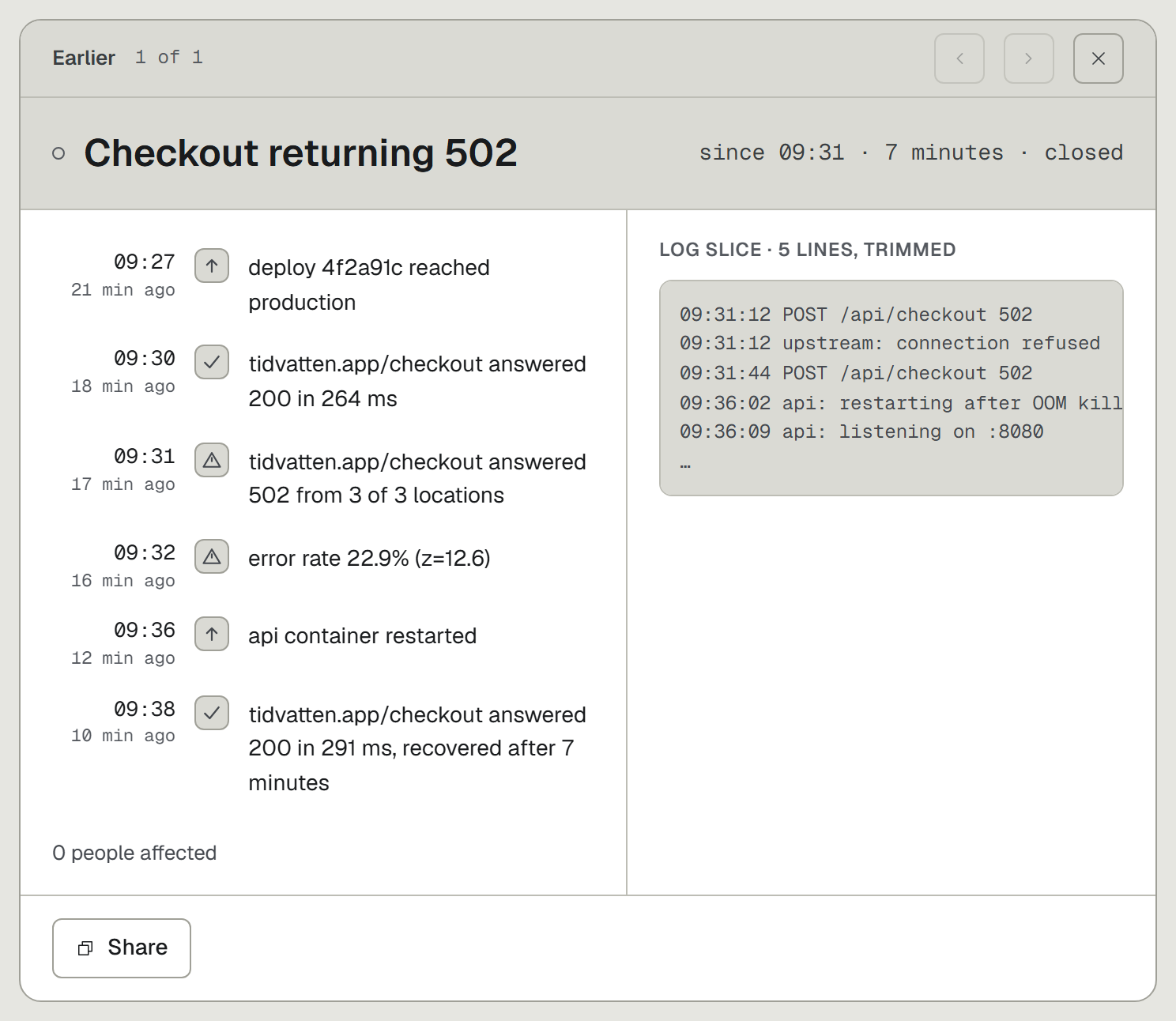
An UpControl incident puts the code in its title, like "Checkout returning 502", so you know what broke before you open anything. It opens after 3 failed checks in a row and closes on the first success, so one network blip never wakes you up.
A 401, 403 or 429 gets special treatment. It usually means a firewall or bot protection blocked our probe, not that your site is down, so UpControl records "couldn't measure" instead of an outage. Your uptime counts only what was actually measured.